Loading...
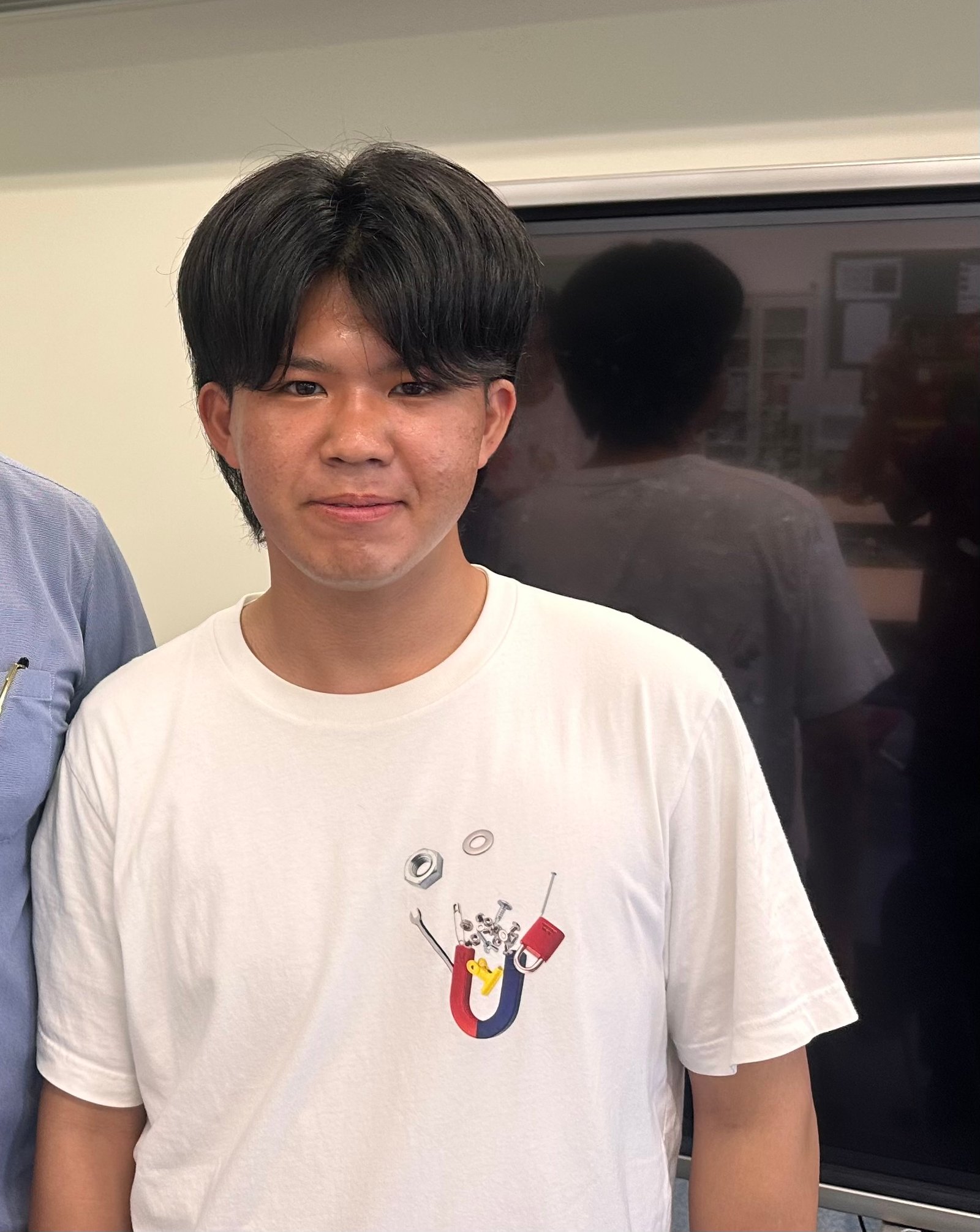
OKAYAMA Yuki
Zero2Entrepreneur Portfolio

OKAYAMA Yuki

Contribution activity

6 contributions in the last year

Submissions, reviews, and documented work

Nov Dec Jan Feb Mar Apr May Jun Jul Aug Sep Oct Nov
Mon Wed Fri
Less More

About Me

岡山 優希 · Faculty of Engineering — Digital Information · 工 工 デジタル情報 · Year 1

4
Submissions
5
Evaluations
2
Fully reviewed
4.2
Avg score

Course submissions

Every submitted session, with the date it was turned in and when it was evaluated.

Session Work Date submitted Evaluation date Reviews
Session 1 Name Problem Prediction Oct 6, 2026 Oct 16, 2026 → Oct 22, 2026 2/2 avg 3.5
Session 2 Field Notes & Empathy Canvas Oct 19, 2026 Oct 20, 2026 1/2 avg 5
Session 3 Subculture: Problem Statement & Canvas Oct 27, 2026 Oct 27, 2026 2/2 avg 4
Session 4 Solution & 6-Slide Pitch Nov 9, 2026 Pending 0/2
Session 1

Name Problem Prediction

Reviews complete
Date submitted
Oct 6, 2026 1:40 AM UTC
Evaluation date
Oct 16, 2026 → Oct 22, 2026
Peer reviews
2 of 2 · avg 3.5/5
What do you predict, and why?

I predict that the number of foreign workers and foreign residents in Japan will continue to increase. As local communities become more multicultural, creating an environment where foreign residents can live together with Japanese residents will become an important challenge. Japan is facing labor shortages because of its declining birthrate, aging population, and population decline. Ehime Prefecture has the same problem, and the number of foreign workers has been increasing. According to the Ehime Labour Bureau, the number of foreign workers in the prefecture reached a record high in October 2025. If this trend continues, foreign workers may become more important members of local communities, not just workers. Ehime Prefecture and the Japanese government are already improving support such as Japanese-language education and daily-life assistance. However, more foreign workers do not necessarily mean more permanent residents because permanent residence has certain requirements. Therefore, Japanese society may become more multicultural, but it will be important to improve support systems so that foreign residents can become part of local communities without creating social divisions.

Evaluations
Review 1 · 5/5
Oct 16, 2026 4:37 AM UTC
Review 2 · 2.5/5
Oct 22, 2026 2:16 AM UTC
Session 2

Field Notes & Empathy Canvas

Awaiting reviews
Date submitted
Oct 19, 2026 8:22 PM UTC
Evaluation date
Oct 20, 2026
Peer reviews
1 of 2 · avg 5/5
Interview three more people about challenges with the education system. Write what you heard (facts and statements), not your interpretation.

I interviewed two university students and one high school student about problems in the education system. Student A (University student): University professors do not have enough time for research. Student B (University student): Education is not keeping up with technological advances. Student C (High school student): The quality of classes varies greatly depending on the teacher.

Fill your Lucid frame for your team with observations. Describe what you added, and include the Lucid link if you have one.

https://lucid.app/lucidspark/606a1b2b-9c46-42eb-8977-2d3f47671723/edit?view_items=08PAvR2zgS33%2C-0RESsrNrLQa%2Cj2REJVK-Rcc4&page=0_0&invitationId=inv_b37866f5-89c6-4aad-9cfb-d3c4952d0168

Identify one problem from your engagements. Who is facing what challenge, and why does it matter?

One problem is the difference in teaching quality between teachers. A high school student said that the quality of classes varies greatly depending on the teacher. This is important because students may not have equal opportunities to receive a good education.

Fill out the Empathy Canvas. Summarize it here and add a photo or link to the canvas.

https://lucid.app/lucidspark/606a1b2b-9c46-42eb-8977-2d3f47671723/edit?view_items=eOizZt-BK-H0&page=0_0&invitationId=inv_b37866f5-89c6-4aad-9cfb-d3c4952d0168

https://lucid.app/lucidspark/606a1b2b-9c46-42eb-8977-2d3f47671723/edit?view_items=eOizZt-BK-H0&page=0_0&invitationId=inv_b37866f5-89c6-4aad-9cfb-d3c4952d0168

Evaluations
Review 1 · 5/5
Oct 20, 2026 3:00 AM UTC
Session 3

Subculture: Problem Statement & Canvas

Reviews complete
Date submitted
Oct 27, 2026 4:22 AM UTC
Evaluation date
Oct 27, 2026
Peer reviews
2 of 2 · avg 4/5
Discuss with your team and finalize the problem statement. Write the statement clearly: who is facing what challenge, in what situation, and why it matters.

Many junior high school students do not have the same chances to learn and try new things because of their family, school, or community. Some students cannot find what they are interested in. They may also feel sad when they compare themselves with others. This is important because these differences can limit their future choices. All students should have equal chances to try new things, find their interests, and discover their possibilities.

Fill in your Canvas with your observations and insights. Summarize what you added, and include a canvas link or photo.

Professors don't have enough time for research. Education is not keeping up with technological advances. The quality of classes varies greatly depending on the teacher. https://lucid.app/lucidspark/606a1b2b-9c46-42eb-8977-2d3f47671723/edit?view_items=v-2EtiG~oGvF%2Cv-2EBTz78AuN%2Cv-2EZGkkIu87&page=0_0&invitationId=inv_b37866f5-89c6-4aad-9cfb-d3c4952d0168

Evaluations
Review 1 · 5/5
Oct 27, 2026 8:01 AM UTC
Review 2 · 3/5
Oct 27, 2026 8:02 AM UTC
Session 4

Solution & 6-Slide Pitch

Awaiting reviews
Date submitted
Nov 9, 2026 11:42 PM UTC
Evaluation date
Pending
Peer reviews
0 of 2
Discuss with your team and finalize the Solution. Write the solution clearly: what you will do, for whom, and why this approach.

We will bring virtual reality (VR) lessons to junior high schools across the country. Students can try different jobs, do science experiments, and take virtual trips. We chose VR because students can have these experiences at school, even if their families cannot pay for trips or extra lessons.

Create a 6-slide pitch covering: Your Team, Problem Definition, Problem Analysis (What, Why, Who, When, and How), and Solution Approach. Summarize the slides here.

Equal Chances to Learn with VR — We want all junior high school students to have the same chances to learn. Three Main Problems — Students’ choices often depend on their families, schools, and money. Why These Gaps Matter — Fewer chances to try new things can hurt students’ confidence and limit their future choices. Our VR Solution — We will bring VR lessons to every junior high school. Students can try jobs, do experiments, and take virtual trips. Two Challenges — Every school needs VR equipment and internet access. VR experiences must also feel close to real life. Our Goal — We want every student to have the chance to follow their dreams.

Submit a link to your Google Slides file. Paste the shareable link, and make sure anyone with the link can view it.

https://docs.google.com/presentation/d/11ZoMzGr3tuqTOmBOd2fYAvwWXIJBo4Ve5no2M8frTXw/edit